In 2015, Jesse Potash and Gaston Blanchet stepped into the “Shark Tank” spotlight. They brought Trunkster, a smart luggage idea that aimed to change travel forever. It had cool features like a garage door, a digital scale, USB ports, and app tracking.
Their bold pitch asked for $1.4 million for just 5% of their company. This made their company worth $28 million. Their journey was just starting, filled with ups and downs.
Key Takeaways
- Trunkster sought a $1.4 million investment for 5% equity on Shark Tank, valuing the company at $28 million.
- Their pitch highlighted innovative travel gadgets such as a zipperless roll-top door and built-in digital scale.
- Founders raised over $2.7 million on Kickstarter and Indiegogo due to initial enthusiasm for their smart luggage concept.
- Despite striking a deal on Shark Tank, Trunkster faced significant challenges post-show.
- Customer feedback was mixed, with frequent mentions of delays and quality issues.
Introduction to Trunkster
Trunkster is a leader in luxury smart luggage. It started with a simple yet groundbreaking idea. Jesse Potash and Gaston Blanchet wanted to merge function and style in travel solutions. They faced many challenges, thought outside the box, and made a big splash on “Shark Tank.”
The Birth of an Idea
Jesse Potash had an epiphany at a luggage store. He saw the flaws in traditional luggage designs. He dreamed of creating luxury smart luggage that was both practical and stylish.
This idea wasn’t just about making a bag. It was about creating a new kind of travel gear. One that would solve the problems of today’s travelers.
Founders Jesse Potash and Gaston Blanchet
Jesse Potash had a clear vision, and Gaston Blanchet shared his passion for innovative travel solutions. Together, they brought creativity and strategy to Trunkster. Their hard work paid off on “Shark Tank,” where they got a big investment from Mark Cuban and Lori Greiner.
This success wasn’t just about the money. It showed their dedication to making travel better for everyone.
Features of Trunkster Smart Luggage
Trunkster’s smart luggage became the most crowdfunded travel campaign ever. It was loved for its mix of style, technology, and convenience. Travelers from all over were drawn to its design and functionality.
Zipperless Roll-Top Door
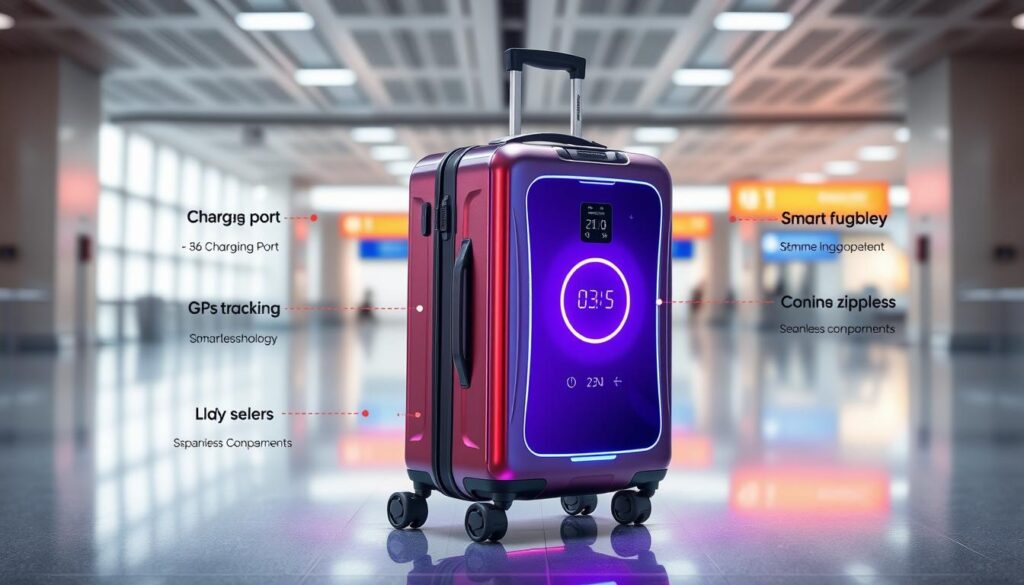
The Zipperless Roll-Top Door is a standout feature. It makes opening the luggage quick and easy, without the trouble of zippers. This design is both durable and convenient, making it a top choice for travelers.
Built-in Digital Scale
The built-in digital scale is a key feature. It helps avoid overweight charges at airports. The scale is built into the handle, making it easy to check your luggage’s weight before you go.
USB Charging Ports
Trunkster’s luggage also has USB charging ports. These ports keep your devices charged while you’re on the move. It’s a great feature for those who can’t live without their tech.
App-Synced Tracking Device
The app-synced tracking device is another great feature. It lets you track your suitcase in real-time through an app. This feature reduces the worry of lost luggage, making travel more secure and convenient.
| Feature | Rating |
|---|---|
| Durability | 4.4 out of 5 |
| Value | 4 out of 5 |
| Style | 4.3 out of 5 |
| Weight | 4.6 out of 5 |
| Smart Features | 4.4 out of 5 |
| Overall Reviewer Rating | 4.4 out of 5 |
Trunkster’s smart luggage is a game-changer for travelers. It combines innovative features with the latest in travel tech. With its zipperless door, digital scale, USB ports, and tracking app, it offers a hassle-free travel experience.
Trunkster’s Debut on Shark Tank
Trunkster’s time on Shark Tank was a big moment for them. They showed off their sliding door luggage with scales and GPS. The founders wanted to wow the investors and they did.
Pitching the Idea
Jesse Potash and Gaston Blanchet stepped into the spotlight. They were ready to show off Trunkster’s cool features. These included zipperless doors, USB ports, and a scale built into the handle.
They talked about selling directly to customers, which made things cheaper and easier. They also shared their success stories. They raised over $2.7 million on Kickstarter and IndieGoGo, and won a big award.
Sharks’ Reactions
The Sharks listened carefully but had mixed feelings. Some liked the design and saw big potential. Others were worried about how it would work in real life.
They asked tough questions about money and how the company was doing. But the founders’ long pitch made a big impact.
The Valuation Debate
The valuation of $28 million was a big topic. Some thought it was too high, especially since the founders didn’t put in much money themselves. Kevin O’Leary was especially skeptical about making money back.
This debate showed how important a good valuation is. But the founders were confident in Trunkster’s future.
The investors were both hopeful and cautious. This episode was a key moment for Trunkster.
| Key Highlights | Details |
|---|---|
| Innovative Features | Zipperless roll-top doors, USB charging ports, built-in handle scale |
| Crowdfunding Success | Over $2.7 million raised |
| Award Recognition | “Tim Ferriss Muse” award in the Shopify Build-A-Business Competition |
| Debated Valuation | $28 million startup valuation |
| Mixed Investor Reactions | Optimism vs. skepticism on ROI |
The Investment from Lori and Mark
The deal on *Shark Tank* was a big moment for the Trunkster founders. Lori Greiner and Mark Cuban invested $1.4 million for 5% of the company. But, there were special terms to help manage risks and rewards.
Terms of the Deal
The talks between the Trunkster team and Lori and Mark were tough. The founders wanted $28 million valuation for $1.4 million, or 5% equity. But, Robert Herjavec thought it was worth $5 to $8 million. Kevin O’Leary even offered a 37% equity for the same amount.
The deal Lori and Mark agreed to was:
- $1.4 million investment for 5% equity
- Double equity clause if the investment was not paid back within 24 months
- $1 per unit royalty in perpetuity
Expectations from the Sharks
Lori Greiner and Mark Cuban had big hopes for Trunkster. Lori wanted to use her network to grow the company. Mark saw the potential in their $2 million in pre-sales and 80% profit margin.
They expected the founders to use Lori’s insights and Mark’s advice. They aimed for $9 million in sales for 2016. The *Shark Tank deal* was made to ensure a return on investment, with extra rewards for success.
Challenges Faced After Shark Tank
After appearing on Shark Tank, Trunkster faced big challenges. These mainly came from manufacturing issues and worries about product quality.

Manufacturing Delays
Trunkster had big plans to meet customer demand quickly. But, they hit roadblocks in the supply chain and finding reliable places to make their products. This led to long delays for customers, making them unhappy.
Product Quality Issues
There were also product quality issues. Trunkster’s first products were innovative, but making more without quality problems was hard. The materials and how they were made didn’t live up to what customers wanted. This led to bad reviews and hurt customer satisfaction.
Trunkster wasn’t alone in these problems. 220 out of 1082 Shark Tank businesses faced similar issues. These included going bankrupt, financial disasters, and other operational problems. Despite the excitement at first, Trunkster’s early vision was not met due to these challenges.
Customer Feedback on Trunkster
Trunkster’s journey from a highly praised product to a controversial one is interesting. Its smart luggage excited many with its unique features. But, real-world feedback showed a more complex story.

Positive Reviews
Some users loved Trunkster’s innovation. They enjoyed the zipperless door and tech like USB ports and a digital scale. Crowdfunding backers were excited for a new travel experience.
The luggage’s design and convenience were often praised. These positive reviews were common.
Criticism and Complaints
But, not all feedback was positive. Many customers had issues with quality and service. They faced problems like broken scales, faulty charging ports, and poor build.
This negative feedback showed Trunkster might not have met quality standards. Customers were unhappy.
Complaints also targeted Trunkster’s customer service. Many felt ignored and issues weren’t solved. This led to doubts about the company’s commitment to customers.
In the end, while some reviews were good, most feedback was negative. The gap between promises and reality hurt Trunkster’s reputation.
Lessons Learned from Trunkster’s Journey
The story of Trunkster in the luggage world teaches us a lot. It shows how important it is to understand startup valuations and manage what others expect. Here are key lessons from Trunkster’s story.
Importance of Valuation
Knowing your startup’s worth is key when looking for investors. Trunkster wanted $1.4 million for 5% of their company on Shark Tank. But, they ended up with a deal worth $1.4 million for 37% each with Mark Cuban and Lori Greiner.
This big difference shows how crucial it is to have a realistic valuation. Guessing your company’s value wrong can lead to bad deals or no deal at all.

Managing Expectations
Trunkster also teaches us about managing what others expect. They had to deal with over 10,000 orders and big logistical problems. Shipping delays and quality issues hurt customer happiness.
It’s important to be open with stakeholders about any issues. This helps keep trust and credibility.
In short, Trunkster’s journey is full of lessons for startups. It teaches us about valuations and managing expectations. Learning these early can help startups succeed and grow with confidence.
Where are the Trunkster Founders Now?
After Trunkster’s rise and fall, Jesse Potash and Gaston Blanchet took different paths. They moved on to new ventures, showing they can adapt in the business world.
Jesse Potash
Jesse Potash has stayed out of the spotlight since Trunkster closed. He now works at Bungalow, focusing on home rentals. This change shows his ability to adapt and innovate in a new field.
Potash’s story highlights the ups and downs of entrepreneurship. It shows how challenges can shape one’s career path.
Gaston Blanchet’s New Venture
Gaston Blanchet started Storypod, an app for kids that mixes stories with learning. It’s been well-received, showing Blanchet’s knack for starting new businesses. Storypod aims to improve early education through fun, interactive tools.
Blanchet’s move to Storypod shows entrepreneurship’s flexibility. It proves you can start anew after facing obstacles.
Jesse Potash and Gaston Blanchet’s stories show different ways entrepreneurs can move forward. They’ve found success in various roles, from strategic operations to starting new companies. Their journeys offer lessons for those starting their own paths.